Just the Haircut Stuff

Riley and I are home alone on a warm Friday afternoon.  We’re not very frisky at the end of the week, both of us happy to curl up with a book or a movie.  But the weather is so lovely, and the espaliered fruit trees I’ve let grow wild are in need of pruning.  We go outside before the day fades and gather our tools.

Clippers in hand, Riley cuts back the dead hydrangea blooms that wintered on the bush.  Up on a ladder, I prune the cherries and then the apple trees, throwing the boughs into a pile in the yard.  Not too far into our work, as the air cools, we decide what we really need is a fire.  Our yard is too small for a proper burn barrel, but we’ve got a portable fire pit, so we haul that out, as well as the pieces of the Christmas tree Owen cut and stacked a few months ago.  Riley goes inside to get the matches, and I realize I’m excited it’s just the two of us, about to share an important rite of passage – a girl learning to build a fire.  We love our boys, but their presence changes the time.

I’ve just finished reading a book with a daunting title by Dr. Leonard Sax:  Girls on the Edge:  The Four Factors Driving the New Crisis for Girls–Sexual Identity, the Cyberbubble, Obsessions, Environmental Toxins.  I don’t feast on a regular diet of self-helpish books, but this one was recommended by a friend, and it was worth the read.  Sax’s perspective has made me think even more concertedly about what and how we teach girls on purpose and through example.  A girl emerging from girlhood with a sense of who she is and a confidence in that identity makes a perilous journey, and not enough of us are paying attention in the right ways, Sax suggests, especially in a culture that pushes girls to be objectified, consumed, subservient.

How well John and I buffer Riley from being awash in pursuits of pop culture and also guide her toward survival and resistance keeps me up some nights.  Most days I think we’re doing okay, even if she does know every stinking lyric to Taylor Swift’s songs.  I have to admit, they’re catchy, but they reek of teen angst; it’s disconcerting to catch my daughter, gripping her hairbrush like a microphone, sing-shouting “We are never ever ever getting back together” to herself in the bathroom mirror with just the right amount of venom.

While she’s inside the house, it occurs to me Riley’s nine already.  Much older than I was when I learned to make a fire.  What am I so busy doing we can’t make time for this?  And if I’ve shanked teaching her this elemental skill, what else am I shanking?

But she knows a lot, I discover.  She’s been reading The Daring Book for Girls by Andrea J. Buchanan and Miriam Peskowitz, and also paying attention.  Close attention.

“I’m a good watcher,” she says.  She builds a teepee of dried leaves and kindling she’s culled from the wood pile.  She chooses a good fire-poking stick from the cherry boughs I’ve hacked.  We talk about safety and how to feed a fire.  She nods and tells me she’s got it; she knows what to do.  I show her how to strike a match, and then hand her the matches and let her begin, enjoying her delight at this responsibility.  She’s brought her clippers and found a small saw, and she uses both to manage the size of her fuel.  Pulling a chair close to the heat, she’s a serious fire tender, watching the flames with intent.  She feeds the fire while I finish pruning, our conversation across the yard meandering and associative.  We walk about the stars and planets, what animals we’ll have on our imaginary ranch, how she reached her record of 213 jumps in a row on a pogo stick.
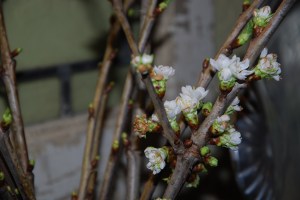
cherry blossoms

cherry blossoms

Dark falls around us, but we don’t go inside.  She wants to know if the green limbs of the cherries and apples will burn, so she conducts an experiment and learns wet boughs kill the fire and the tinder-dry Christmas tree creates a fire so high it makes its own wind.  She wonders whether the cuttings will grow if we stick them directly into dirt, so we choose a few to experiment with in that way, and a few others to bring inside and force bloom.  “What does that mean?” she asks me.

“It’s a trick,” I say.  “The plant is fooled that it’s spring, so it lets the blossoms come out of the buds early.”  As I form my answer, it occurs to me we could just as easily be talking about the journey of girls today, and the way culture sexualizes them, tricking them into acting like adults before they know what that means emotionally.  The loud metaphor makes me stop for a minute and follow the breadcrumbs.  I watch Riley choose stems and put them into an old metal pitcher we use as a vase.

I’m sick at heart at the thought of her forced to bloom out of her magical world by pressure to become a woman too early.  Growing up will come for her eventually, and she’ll lose interest in climbing trees and playing her imaginary dragon games, in challenging herself for the next pogo stick record and building seven room forts out of blankets and pillows in the family room.  Innocence won’t last, is already leaving, I know, but I send up a please to the trees that Riley’s safe passage into her pre-teens also means she holds onto the person she’s becoming, and not a version of the girl she thinks she ought to be.

We cut red currant and Daphne boughs to bring inside as well, because if a few stems are good, more are better, and we’re talking about how the whole house will be full of spring. Maybe it’s the jasmine-lemon scent of the Daphne that has bloomed already, on its own time, or my penchant for drama fueled by remembering a few of Sax’s less savory anecdotes about girls gone wild, meant to be cautionary tales.  Down the Rabbit Hole I go, imagining a version of Riley that trawls the mall and has Bieber Fever, hinges her fashion choices around her five pairs of Ugs and gives up sports for cheerleading.  Then there’s a boyfriend who’s too old for her with some gold chains and a red Mustang, and she fails out of school and is having sex in the back of a car, and she has a couple of piercings and maybe there’s some pole dancing, and I’m working myself into a vicious panic and feeling like I need a beer or maybe six, and I know my visions suffer under the pathetic weight of being cliché and cast in a low-budget-made-for-television-glow, and I’m supposed to be good at narrative but I can’t even make a scary-daughter-dystopia that’s interesting.

And how did I get here from being excited about teaching her to build a fire? Which I didn’t do anyway because she already knows how.

Riley finishes her arrangements of cherry boughs in the vase and turns to me.  “So.  It’s kind of like cheating and being the boss of nature,” she says.  “You wouldn’t want to cut too much, though.  Just the haircut stuff.”

Clever girl.  I’m swimming back to the surface, where I send my B-Rate-Riley production packing and I nod, thinking about a week from now, when all the stems we bring inside will be in full bloom, a reminder of building a fire, and the way my girl knows herself so well already.  “Yes,” I say.  “Just the haircut stuff is perfect.”

red currant

red currant

Categories: books, gardening, girls, Uncategorized, writing | Tags: , , , , , | 1 Comment

Harvest of People

Each new year I engage in the secret, irrational hope of making resolutions.  My good intentions usually last until about March, although each year I hope will be the exception, when I make it all the way to December.  Maybe 2013 will be it.  I hope so.  This year the list looks like it generally does, a collection of rusted resolves from previous years and some new ones too. They’re written on post-its that have already lost their sticky-power; I keep finding them on the floor or attached to the bottoms of my socks.  Probably, there should be fewer than ten and I should keep them to myself, but I’m still in the honeymoon period, encouraged by the way sharing them might help them to survive:

  1. practice the Zora way = more wag & less bark
  2. learn to play guitar
  3. run a marathon
  4. do at least 10 minutes of core per day (before you stick your head inside the computer; how hard can it be?)
  5. write
  6. write
  7. finish a draft of a novel
  8. be grateful
  9. be humble
  10. be centered

Now, almost at the end of January, I have resolve still in the tank, though the guitar has been swapped out for a ukulele.  I’m awful at it.  I watch You-Tube videos to keep myself motivated.  Maybe by spring I’ll be able to strum something that sounds like a song.

I’m trying not to spend too much time looking ahead, but it’s dark and cold and gray.  Blessedly, the days are getting longer.  It’s time to start mapping out the garden, order seeds, and calculate what my soil will grow.   With spring in the wings, it’s a little hard to practice living centered in the now, especially when a whole lot of the now, honestly, is pretty painful.  Having to explain to my kids why friends lose their jobs, or get cancer, or decide to divorce, what the hell the deal is with Twitter, or why bullies have such power, or why there are all those empty desks in Connecticut, leaves me feeling inadequate to the task.  We must learn to rub along with people of all kinds, I say to them.  Some relationships are for business, others are toxic and teach you about boundaries and knowing yourself.  Some relationships are for friendship, some are for love, some fall away.  It’s all part of the deal, I tell them.  Our job is to acknowledge that we can’t control other people or their responses to the world, we can only be in charge of ourselves.  But they’re kids; they think I’m not hearing them well enough.  They want life to be decipherable, literal, with rules they can anticipate and apply.

I try, always, to end these hard conversations with what we are grateful for –the winter wren; books and chocolate; our chickens, who press themselves in a heap against the glass of the slider doors, asking to come inside and be with us when it’s cold; the woods; the tangle of people we hold dear in our lives, for whom we have fierce love.  But some days, when the world feels bleak, and when my advice is cold comfort for kids working to make sense of the world, digging for gratitude is damn hard.

Before the new year a poem by Max Coots arrived in the mail from a friend.   Max is someone I’d never heard of, but his words — grounded, grateful, funny– made me want to invite him over for dinner or a glass of wine.   I asked Uncle Google about him and discovered he died in 2009 after a long, rich life as a Renaissance Man.  A Unitarian Universalist minister, a sculptor of gargoyles (this, alone, is enough to make me half fall in love with him), a poet, and a gardener, Reverend Max was the kind of guy who spent his life working to embody my resolutions.  Maybe not the ukulele or the ten minutes of core, but it seems to me he was the kind of spirit I aim to be.

Anyway, here’s to Max, to the journey resolutions bring, to sowing seeds — real and metaphoric–with kids, to a garden of friends, and to gratitude:

A HARVEST OF PEOPLE

Max Coots

Let us give thanks for a bounty of people:

For generous friends, with smiles as bright as their blossoms.

For feisty friends as tart as apples;

For continuous friends who, like scallions and cucumbers, keep reminding us that we’ve had them.

For crotchety friends, as sour as rhubarb and as indestructible;

For handsome friends, who are as gorgeous as eggplants and as elegant as a row of corn; and the others as plain as potatoes and as good for you.

For friends as unpretentious as cabbages, as subtle as summer squash, as persistent as parsley, as endless as zucchini, and who, like parsnips, can be counted on to see you through the winter.

For old friends, nodding like sunflowers in the evening-time.

For young friends, who wind around like tendrils and hold us.

We give thanks for friends now gone, like gardens past that have been

harvested, but who fed us in their times that we might live.


Categories: community, gardening, writing | Tags: , , , | 5 Comments

just feel the road

I was only about twelve when my Dad taught me to drive.  We kept it from my mother for a few years, an easy thing to do since most of those early miles were on dirt roads in Georgia, travelled so Dad and I could troll the woods for firewood in later summer and fall.  Going woodin’, we called it. Of his children, four of them girls, I was the oldest.  For a long time I think he figured there would be no son; I was interested in learning to do what I saw boys doing, and Dad wanted to teach someone.  So I learned to play baseball, chop wood, work on cars, and drive our enormous Chevy truck.

Dad was probably often nervous, though there was never any real evidence of panic.  That first year, I wasn’t tall enough to see over the steering wheel.  I sometimes sat on a phone book if the road was narrow, and I recall always gripping the wheel so hard my hands would remember that clutched position for an hour afterward.  “Just feel the road,” he’d say, and I had no idea what that meant.  “Keep that strip along the center of the hood lined up with the right shoulder.” I’d nod and try and focus on everything at once, which was hard.  Dad sat in the passenger seat, gesturing out the window with the beer he opened as soon as I took the wheel, wondering aloud how much wood we’d need to get through winter.

If the truck got too close to the edge of the road, he’d point me away from that spot with his beer –“You don’t want to pulse the gas pedal.  Steady and mellow.  That’s the way.” –then go on talking.  Writing this makes me smile and shake my head all at once.  Those were some of the best times I had with my father.  Inside the truck’s cab we shared a sense of joint purpose and camaraderie; our mission was to get firewood, but we were working at other things, too, namely how in the hell to speak each other’s language.  I wasn’t a handful of a kid, but I was their first teenager, and that was foreign territory for my parents.  In those days, it wasn’t uncommon for the passenger to drink in the car, nor for kids to drive early.  Looking back, what was uncommon was for this to be a father-daughter ritual.

I didn’t think too much about it when I was a teen, but now that I’m a parent, living in an age full of entitled kids, hyper-vigilant parents, and too many friends who’ve died in car accidents where drinking and driving was the cause, I can’t help but see the past through a new lens.  To be sure, I won’t duplicate this driving school method with my own kids.   Still, as a teenager, I was aware of the gift I’d been given, and how being able to operate a vehicle would unfold more freedoms if I did a good job and proved I could keep calm and carry on.

Of course, I didn’t always make good choices.  Who does?  The blessing and the curse of those years is an inability to see the world very clearly.  Early on in my driving career I scratched the whole left flank of a friend’s parents’ car against their garden hose reel handle.  I wasn’t supposed to be driving that car, which is another story I’m not prepared to tell – I’m not sure I even had a license yet.  My parents made me write a formal apology, deliver it in person, and pay for a new paint job.  Another time I let the car my sisters and I shared run out of oil and it threw a rod, ruining the engine.  My punishment that time was to spend weekends with Dad rebuilding the engine.

Now I’m the parent of a teenager, and the question of driving is beginning to occupy more space in our family conversations.  For many years, I imagined I’d be the parent who taught her kids to drive early, like Dad taught me, minus the beer drinking and the chainsaw.  But I’m thinking I’m not that cool after all.  Like a lot of boys, my son Owen’s a fidgeter, a disrupter, and full of restless energy that gets him into trouble too much of the time.  He’s book smart but not that street smart, despite our (mostly) patient efforts to help him build this toolbox.

Me:                  Why did you shoot your sister in the eye with a rubber band at point-blank range?

Owen:             I don’t know.

Me:                  Please help me understand why you opened the car door while I was driving on the freeway.

Owen:             I’m not sure.  I didn’t fall out, though.

Me:                  Help me see why you were hitting golf balls down the alley toward the neighbors’ houses.

Owen:             I don’t know.  But I didn’t hit any windows.

Me:                  You understand, right, when you respond in a nasty way to a group text that more than one

person can see it?

Owen:             Wait.  That was a group text? 

I don’t want to air all of our dirty family laundry (what would I write about?), but these sorts of episodes make me really wonder about letting Owen get behind the wheel of a car, even if I’m also there, not drinking beer while gently guiding him toward good driving and decision-making skills.

To wit.  This past Thanksgiving, when part of my extended family gathered at my aunt and uncle’s farm.  On this farm they have a golf cart, which they use as a utility vehicle to get my grandmother out of the house so she can see the property and breathe fresh air.  The kids believe this to be a false use for the cart – they spend hours driving it.  Picture a golf cart packed with kids.  Owen at the wheel because he’s usually the oldest cousin there.  There’s much careening down the slope of the west pasture too fast.  Dogs chase behind because kids are fun and will feed them treats they’re not supposed to have.  Kids hang off the sides of the cart singing, screaming and frequently falling off.  Often there’s crying and fighting.  They get back on and don’t tell their parents, because then the golf cart would be put into the barn on time-out.

My dog Zora loves the golf cart almost as much as she loves cats and squirrels.  She especially loves the wheels of the golf cart, which she attacks while making ferocious attack-dog noises.  I’ve trained her not to do this, so when I drive the cart she either gets in with me or runs alongside.  But Owen thinks Zora’s frantic, yipping game is fun, and so he encourages her.

Dogs, in the end, no matter how smart they are, are not that smart when they’re on the chase.  Boys I’ve given birth to, in the end, no matter how smart they are, are not that smart when they’re in a chasing game.  You can see where this is going.

Just before Thanksgiving dinner the kids came running back to the house to report that Owen had run the dog over with the golf cart.  We all went outside, my Dad included, who turned to me to say, “You don’t let him drive the car yet, do you?” Owen was walking up the hill carrying the dog.  He put her down and she stood up, though she kept licking at her backside.

Me:                  Please help me understand why you let her chase the wheel.  We’ve talked about that a lot.

Owen:             Well.  She wanted to.  Do you think she’ll be okay? I think she got stuck under the axle.

The next day, Zora couldn’t walk.  So we spent Black Friday at the vet shopping for x-rays that told us there were no broken bones or internal bleeding.  She’s hopped up on pain meds, and she’s going to be fine, though we’re only just taking short walks.

John and I decided a reasonable consequence for Owen was no more golf cart privileges at the farm.  At least for now.  It’ll sting as an outcome, because the next cousin in line is only ten.  She’ll be delighted to be the new chief driver, though.  Owen’s also had to write me a check out of his savings account to pay the vet bill, which is doubly painful because that money is meant for his future driving self.

Owen:             But how will I have enough money to pay for car insurance when I need it?

Me:                  (Response not fit to print)

As for Owen’s official driver’s training, I’m thinking I’ll import my Dad to do the job.  As long as he saves the beer for after.

Categories: dogs, writing | Tags: , , | 6 Comments

i could be that bird

Kathleen Dean Moore’s book, Wild Comfort, is a gorgeous and rich collection of essays.  Moore’s writing is lyrical and dense, not the kind of prose you can gobble up in one sitting.  I found myself carrying this book with me wherever I went all week, comforted by its presence in my bag, anticipating having ten minutes (more if I could get them) to read a passage.  Her pieces are reflections of what we give and take from the natural world; how we grieve and what that means; the ways our culture invites us to fall away from nature in the name of progress and how, still, we find we need the solace of wilderness.  To be a naturalist, Moore suggests, is to have a kind of split personality – part grim reality, the byproduct of seeing environment through a scientist’s lens; part heady joy of one whose senses are on full alert.

For my part, I find grim reality is a space I occupy too often.  I forget, in my obsession with humanity’s dark underbelly, evident especially in this election season, that there’s so much to be grateful for – the kids I work with in the school garden who’ll try any vegetable I ask them to because they love the space they’ve helped to cultivate, the bumper crop of Jonagold apples bursting from my tiny, espaliered trees.  The color amber.  How my dog’s feet smell like Fritos.

I could choose to find joy more than I do, focusing less on how the world seems determined to forget history, or how any shopping excursion is proof we really are zombies and don’t know it yet, or how a generator and a crossbow are probably the best tools in preparation for the end-of-days.  I could choose to be the bird of Emily Dickinson’s poem, the one singing her heart out through the storm:  “Hope is the thing with feathers/That perches in the soul…”  I could be the bird and live a more intentional life with less cynicism.  I could be that bird…

In her book, Moore frets about not living an intentional enough life.  As an exercise in gratitude, she decided to establish a “happy basket” on her desk, into which she put pieces of paper with notes recording times she felt really happy.  Her plan was to document things that brought her joy for a year, and then go through and evaluate the data.  Ultimately, she didn’t make it for the year, which I love.  One crummy day eight months or so into the project, she tipped out the basket to see what those scraps could tell her – chiefly, that none of the ways the world said she should be happy actually made her happy.  Not stuff or success.  Ideas, solitude, her kids, and moving in the outdoors delivered joy and grounded her.

Yesterday I was talking to a dear friend on the phone, lamenting the way I am built to be dissatisfied, suggesting I, too, should start a happy basket.  She was quiet for a minute, and then said to me, “But that’s what your blog is.  You don’t need a basket for your desk.”

Which I guess is true as I look back over my posts.

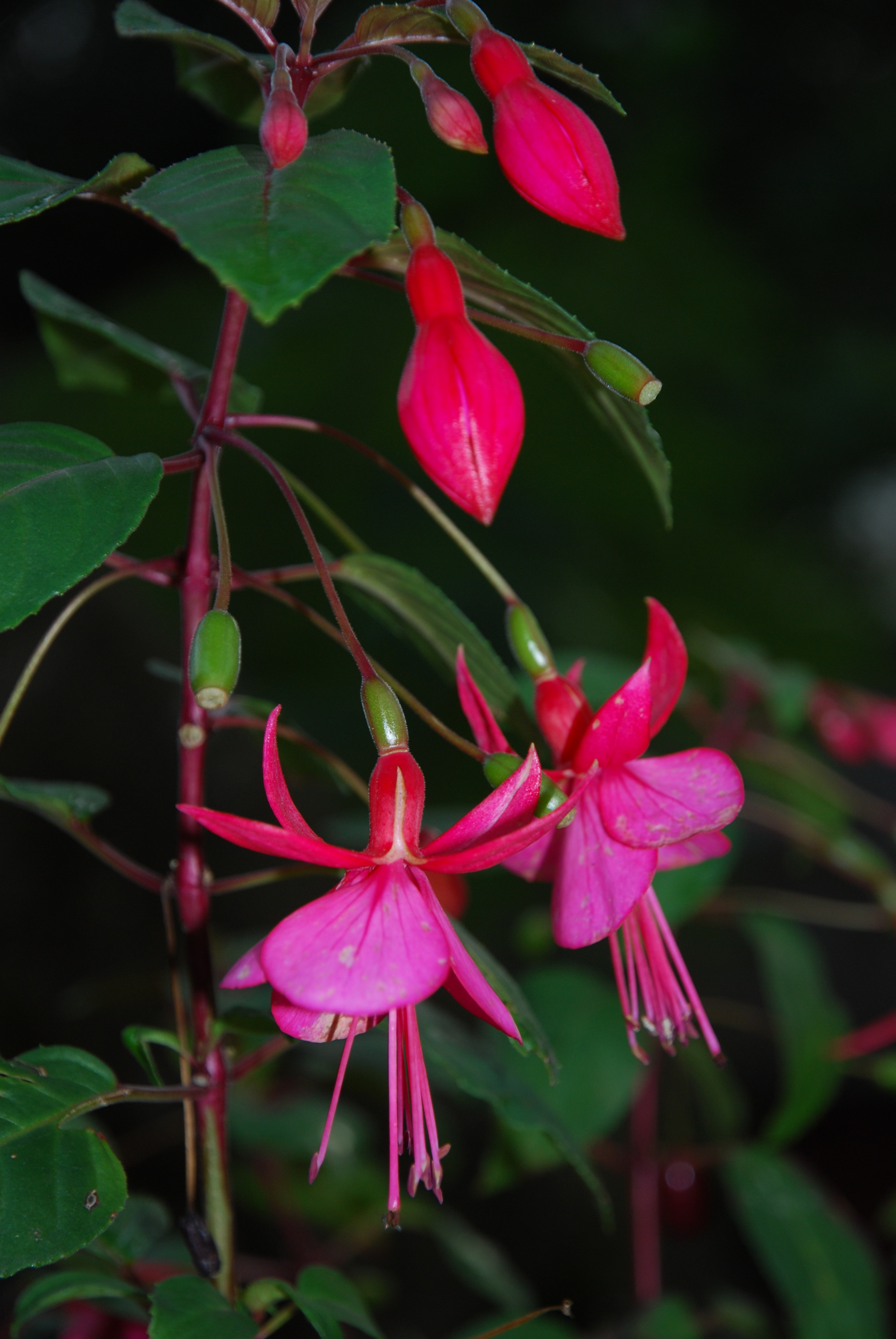
While we were on the phone, I stood at the window and watched the caramelized colors of autumn in my backyard, the quilt of leaves I would have to rake again before the rain came.  There’s one holdout of summer’s gaudy blaze left in the yard, a fuchsia in full bloom.  Fuchsia have a reputation for being difficult to grow, temperamental without diligent fertilizing, and prone to dying easily if you don’t baby them.  I have utterly neglected this plant, which lives in a planter box on my deck.  While everything else around it is closing up shop for winter, this fuchsia is hardy, saucy, showing off with her pendulous bloom, her firecracker bloomers.

I was about to ring off, promising to post a missive worthy of a happy basket if I could dip into the well and find something, when a female Anna’s Hummingbird arrived to my fuchsia, sucking down nectar as fast as she could.  Not all of them migrate from our part of the state, I guess, and maybe this one intended to meet some friends in California or Mexico later.

But she stayed for a while, immersed in feeding on each one of those sweet fuchsia globes long enough to allow me a good look at her red-flecked head and peacock-colored wings. Although my friend is thousands of miles away, we saw it together.  A gift to witness and to share, a thing I would’ve written on a scrap of paper and put in a basket.

Categories: books, gardening, writing | Tags: , , | Leave a comment

the world according to william stafford

A poem by William Stafford hangs on the wall near my writing desk.  Letterpress printed on a broadside by the talented team Marquita Green (she linocut the image and is also the most fabulous woodturner) & Joseph Green (a poet in his own right) on one of their vintage printing presses, Stafford’s prescient words are framed by a woods scene and some deer.  I make a habit to read the poem whenever I sit down, and to reflect upon how aptly Marquita and Joe have captured its essence.

A funny thing has happened in the year or so since I put the poem there:  it’s become a kind of baseline by which I write, a place from which to jump off each session, and a reminder to allow my characters to be imperiled, whatever that means for each of them.

Meditation

Animals full of light

walk through the forest

toward someone aiming a gun

loaded with darkness.


That’s the world:  God

holding still

letting it happen again,

and again and again.


Categories: Uncategorized | 1 Comment

Harvest

Despite the vow I make each June to write at least a page every day no matter what, summer sucked me into the vortex again.

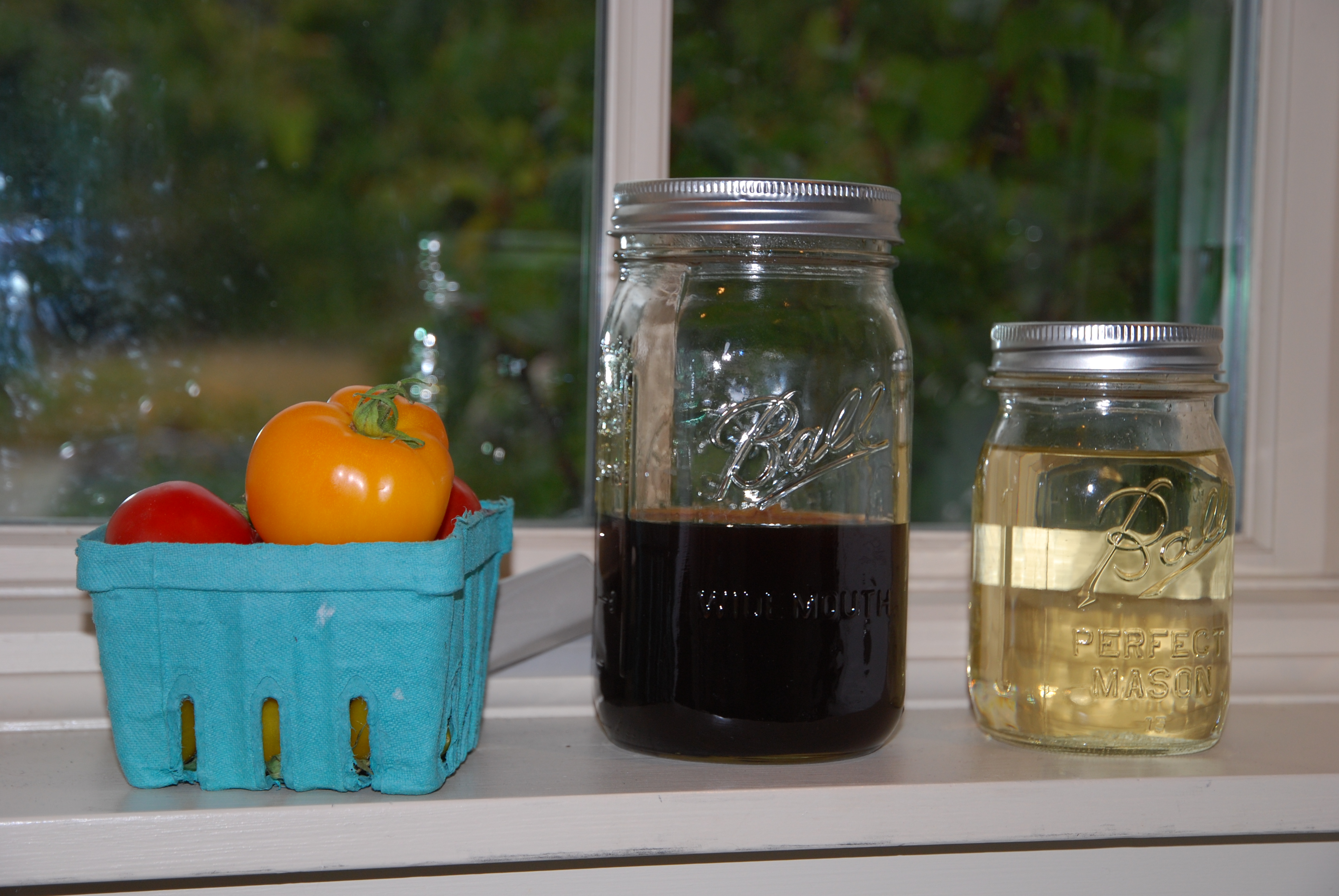
Don’t get me wrong.  Summer’s a good whirling dervish space of a place.  My daughter  runs wild through the house and neighborhood, checking in when she’s hungry, climbing trees and making potions in mason jars she and her friends try and convince the neighbors to taste (they’re mostly made of edible things). My son inhales baseball in all forms – playing, watching, conjuring and analyzing the stats of professional players and his friends out of thin air, usually during a conversation that has nothing to do with baseball.  The dog has that wild-eyed, hang-tongued joy born of a plenty of exercise in the woods.  The T.V. hardly comes on (except for baseball).  We camp and swim.  We eat when we’re hungry, sleep when we’re sleepy, and life feels like one long binging arc of sunlight, fresh produce, and clear, dark nights.

Crayfish Warrior

Then the light changes all at once, it seems, slanting to spotlight the places I’ve spent a season not cleaning.  There’s a chill at dawn, and the edges of the maple leaves color just a little, and I come to.  Hung-over, feeling like maybe I’ve been among the Lotus-Eaters, that the pleasure cruise of summer must end or I can never go back.  Odysseus’ men had him to yank them out of their partied stupor and back to the boat.  For me it’s not so dramatic.  I buy school supplies. I get the canning equipment out.  This is the hinge, the transition from the hum of summer to the quiet of fall by way of harvest.  Once I step over the threshold, I can stick my head back into my writing life.

My kids think I’m a little crazy.  For them the garden is a place to graze when they’re hungry and look for bugs.  By the time the real harvest comes, the thrill is gone.  Whether the peaches rot before we eat them isn’t urgent to them.  What’s urgent is being outside, filling up on the last sunny days before the rains and homework arrive.  I remember feeling the same way.  When I was young, my mom spent the end of summer in the kitchen wearing her apron, sweating over a giant boiling vat of jam jars in their hot bath, muttering to herself about pectin.  I couldn’t understand what the big deal was then, but I do now.  What I worked so hard for in spring is knocking at the door, and it’s urgent.

The garlic hangs to dry, though I failed at braiding it again.  Apples and beans are ready to pick.  What I thought were brussels sprouts are actually several heads of cabbage.  I’ve put up applesauce, tomato sauce, zucchini relish and peaches.  On my countertop distillery two kinds of kombucha and a batch of beet vodka are doing their good work.  Since I don’t brew beer, I’m harvesting the seven million hops it seemed like a good idea to grow for friends who do.  It’s busy and hot in the kitchen, and there’s not enough space, but I love it anyway.

Because in January, when the heat of summer is long gone, and the sky is relentlessly gray for weeks at a time, and my skin resembles the soft underbelly of salamanders, I’ll be rich with the taste of summer.  And with pages.  Lots of pages.

Categories: gardening, writing | 3 Comments

fiction365

Check out Fiction365, whose mission to publish a story a day is both ambitious and validating for short story lovers.  They chose  “The Water Men” for today’s story. Many thanks, Fiction365, for the honor of being among your storytellers.

Categories: fiction, short story, writing | 2 Comments

demolition on hold

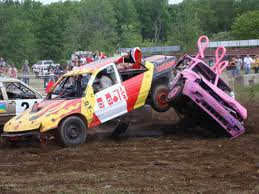
Our local demolition derby is cancelled this year.  Organizers said there wasn’t enough interest, which I guess means there weren’t enough entries since the stands are packed with spectators every year.

I’m sad, to be sure, and confused.  For months some friends and I have been creating a derby car, a scheme hatched at last year’s destruction derby.  Not too long after that night we found the perfect carcass of a car and hauled it home on a rented flatbed.  We borrowed an engine.  We’ve skulked around junkyards.  Our car lives in the shop of a friend, our ringleader, the beating heart of the operation.  Knowing the goal is to destroy what we create has been a delicious torment.  A twisted anticipation.  Mostly, we’ve enjoyed rich, sometimes frustrating, time together and haven’t spent too much money.  Maybe I’m delusional, but our efforts remind me a little of barn raising, even though our end game is to ruin what our hands have built (but not so much that we can’t reuse the engine and the car).  We gather, we plan, we build, we eat, we admire what our joint ideas render for the group.

I can’t explain the lack of destruction derby entries, though one of the event organizers bemoaned the recession.  In a listing economy, I think it makes perfect sense to go out and wreck something.  But creating a car is about more than this impulse.  It’s a way to keep life simple, centered, local.  A  little money and some sweat equity can make a good derby car, and businesses will often sponsor such a project.  As hobbies go, you can’t get one more wholesome than hanging out in a friend’s garage.  Heads under the hood of the car, the group of you trying to figure out how to make the thing run with a borrowed engine and some junkyard parts while the smell of motor oil and hand cleaner and beer and music from the beat-up radio on top of the workbench filter in.  The garage is the place where mechanical skill and art, invention and logic, friendship and communication intersect.  And I haven’t even mentioned the joy a car brings to thousands of spectators, no matter if it dies in the first round.

Neighboring counties will host derbies this summer, but we’re not so ambitious that we’ll take our act on the road.  Part of the charm of it was always operating entirely on a local level.  So.  Our car will just have to wait.  And so will we.  Besides, another year of tinkering on our joint effort will be an alright way to spend the long winter hours.


Categories: demolition derby | Leave a comment

thanks, gospodor

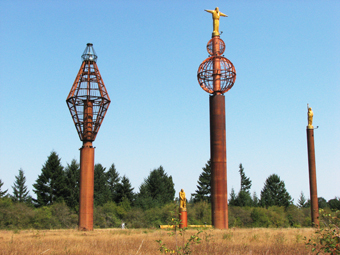
Often, when I decide to write a story or plant a garden and turn inspiration into artifact, I think about Dominic Gospodor.  He’s not my muse exactly.  And he’s not related to me.  In fact, I’ve never met him.  An eccentric millionaire devoted to creating sculptures in honor of the oppressed or forgotten, Gospodor is maybe best known for Gospodor’s Monument, his field of strange art along I-5.  He built it despite criticism for his art form, sure to be an eyesore, and for creating a potential traffic hazard.  From the beginning, people haven’t been able to help themselves when they drive by.  They slow down.  They veer.  They take pictures, sometimes while still driving.

The place lights up at night.  It’s fantastically bizarre.

The first time I drove by it, which was at night, I almost crashed my car trying to figure out what the hell was going on in that space.  Here’s a picture:

I’m not sure I’d want one of Gospodor’s pieces in my own field.  But for me, his sculptures serve as a reminder of how mysterious and passionate an engine the journey from inspiration to creation is.  He spent close to a million dollars to bring to life three 20-foot gold-painted wooden sculptures atop copper-colored steel towers (the highest one is 100-feet).  The sculptures pay homage to Native Americans, Mother Teresa and victims of the Holocaust.  There’s also what Gospodor claimed to be the world’s largest weather vane with its giant Alaskan flag paying tribute to William H. Seward, the Secretary of State who bought Alaska from Russia in 1867.  Gospodor had big plans for more creations to honor victims of drunk driving and slavery, as well as smaller monuments for Susan B. Anthony and Jonas Salk, but he died before those could be realized.

I’m a big fan of any Roadside America attraction, but Gospodor’s field, one I drive by a few times a year, has a special place in my heart.  When he died in 2010 at 86, he gave what money he had left to the homeless and the poor, so the question of stewardship of his unusual monument has been up in the air until recently.  A few weeks ago, the Cowlitz Indian Tribe agreed to oversee the land and work to preserve it as a cultural and historical site.

I’ll never get the chance to meet Gospodor, but I’m grateful his art will stay alive in the world, odd as it is.  We should all be so lucky to create outside the din of mainstream expectations.

So thanks, Gospodor, wherever you are.

Categories: community, writing | 2 Comments

the short story is anything but dead

Many writers compelled to craft short fiction do so against the big question about whether the short story is dying.  As a writer and a reader, I don’t feel this is true at all.  But then, I’m a fan of the form, even on days when I want to light my work on fire.  Short stories are the perfect length for the hectic life.  They’re much easier to inhabit, to fully drop into and then emerge out of, than novels.  You can get the satisfaction of a full narrative arc in the time it takes to commute to work, cook something at the stove, or wait at a doctor’s office.  I’ve even read flash fiction while brushing my teeth (a few times I’ve stood at the sink with suds in my mouth, the toothbrush forgotten).

I’m not saying reading short fiction should only be shoe-horned between other activities; I’m only pointing out it can be done that way, very satisfyingly.  Also, I’m guessing the reading life looks like this for many of us — more catch-as-catch-can and less feet-up-on-the-couch than we’d like it to be.

I’d argue the short story isn’t as “pallid” or “ill from neglect” as Mary Gaitskill once suggested.  Nor are short stories just “written for editors and teachers rather than for readers,” as Stephen King once lamented was the by-product of a shrinking readership.   There are many fine journals out there doing the good, hard work of keeping the short form alive, and a heap of talented emerging writers showing up in those pages.  And there are readers.  Plenty of them, and not all of them writers.

Readers are smart, after all, and know when they’re in good hands.  This is one of the first tenets you learn in any writing program.

Speaking of being in good hands, each year the Chicago Tribune invites writers to submit short fiction for its Nelson Algren Award.  Named after the writer Nelson Algren, the contest is free.  You can submit two stories.  If you win, there’s a generous prize, your piece is published in the paper, and you get to be in the company of fellow Nelson Algren winners like Louise Erdrich, Julia Glass, Melissa Bank and E.J Levy, to name just a few.

Beginning in February of this year, the Tribune added a book geek’s membership society called Printers Row.   Taking a page out of One Story‘s mission to send singleton stories to subscribers every three weeks, Printers Row sends out a weekly short story.  It’s also free to submit work for this project, and you can track your submission on Submishmash.

Heather E. Goodman‘s kick-ass story His Dog won the 2008 Nelson Algren Award and is now out as a Printers Row piece.  Goodman’s characters are a hardscrabble lot, eking out a life on the land and with each other.  The story is tender, gritty, unrelenting and carries you toward an inevitability that is the perfect final act, though you don’t see it coming.  But don’t believe me.  Read it for yourself online or pony up for a Printers Row subscription.  You’ll get to hold this gem in your hands and be reminded each week that the short story is alive and well.

Categories: fiction, publishing, short story, writing | Tags: , , , | 3 Comments

Create a free website or blog at WordPress.com.