writing

how can i keep from singing?

More like an older sister than an aunt, Susie taught me to swim.  I was nine the summer she came to visit, and though I splashed around easily enough in the shallow end, nothing I did resembled a stroke.  Over the course of a week, Susie worked with me at our little community pool, teaching me to do the freestyle and be brave in water.  On day four I made the discovery that submerging my head wouldn’t mean sudden death.  After that I was golden.

Since that summer I’ve been a swimmer.  Not a competitive one, but a dabbler in the unstructured water play of paddling across lakes and rivers, jumping off rocks, bodysurfing, rafting.

In addition to last year’s big life changes I’ve probably written about too much here, in the fall I added swimming laps, a new skill that still feels humbling.  I was looking for another activity that might deliver the kind of focused non-focus of running, one I’ll be able to do for many years, long after my running knees give out.

That I was very bad at surviving laps in the beginning is an understatement.  But it was thrilling to engage in something at which I was terrible.  I had to learn to sustain swimming and breathing at the same time without panicking and stopping in the middle of the pool to gasp for air.  To put on a swim cap.  To wear goggles so they were tight enough to work but not so tight they nearly sucked my eyes out of my sockets.  To swim in a straight line and share a lane with another swimmer.  To “deal” with the wall every twenty-five yards.

At first, swimming four laps in a row left me completely without breath.  For the first month I could only swim ten slow, tortuous laps before peeling off, exhausted, to simmer in the Jacuzzi.  In the second month I tasked myself with braving the wall via flip turn, and the day I figured out how to plan for and execute a series of turns I was high on life the rest of the day.   The day swimming laps gave me a glimmer of the kind of meditation I feel while trail running was even more affirming.

Given the choice, I’d rather swim in a lake or bay over a pool, but I imagine no matter the space, I’ll be a swimmer as long as I can still walk.  I’m grateful about that.

It’s 2014, time to renew my vow to learn something new.

On a whim a few weeks ago, Riley and I tagged along with some friends to their choir practice.  Though we met at a church because that’s a space large enough for the group, the choir is secular and intergenerational.  I’ve never really sung before, unless I count the shower or those musical performances from grade school.  In high school I was both too shy and too busy playing sports to spend any time in the arts and theatre wing, a fact which I regret a now.  Despite a year or so of piano in middle school, I can’t read music, and I don’t have a great voice.  I’m on friendly terms with the voice I do have.  Singing in public terrifies me.

In a packed sanctuary hall the night of our first practice, we met and were wrangled by three local, professional musicians, our leaders, who believe so strongly in the power of the collective voice they’ve volunteered their time in this way.  A white-haired woman with a walker sporting orange tennis balls staked out a place at the back of the sanctuary.  With our friends, we squeezed four bodies onto two chairs next to her.  Kids of all ages wiggled and danced beneath the stage as we sang ten or so tunes, many we knew and some we didn’t.  Reading lyrics projected on a huge screen at the back of the stage, we practiced singing in harmony.  We sang in round.  Folk, pop, blues, tunes from around the world.

I spent much of the evening sweating, working to manage anxiety about whether and how my voice belonged. But there are three hundred of us, and we sound good together.  I can see that each week my fears will be allayed by my own efforts and being buoyed by the group.  Our sessions together will be about the community building of raising our voices in song, and also about preparing for a culminating performance in the spring.

Pete Seeger had just passed away a few days before our first choir meeting.  Even though he’d had a good run, dying quietly at 94, I’d been melancholy about his presence gone from the world.  At home I’d been playing over and over Springsteen’s The Seeger Sessions and thinking back to 2002, when John, Owen and I went to the Great Hudson River Revival, an annual folk festival Pete and his wife Toshi began in 1966 to raise awareness about keeping the Hudson River and surrounding wetlands healthy.

That June weekend in New York was a rainy, hot muddy mess of a festival.  Food vendors and magicians, hacky-sackers and jugglers, artists and storytellers filled the grounds.  The afternoon Pete took the stage toward the end of the weekend, it was still raining steadily.  John and I sat in our chairs, a blanket over Owen who slept across our laps, finally worn out, and for an hour we sang along with Pete and other musicians who joined him.  Songs we’d known since we could walk and sing.  This Land is Your LandIf I Had a Hammer. Turn, Turn, Turn.  We Shall Overcome.

Then, I was aware as I scanned the soggy crowd that we were in the presence of a kind of greatness.  Everyone sang, most eyes on Pete and his banjo, his enthusiasm and gathering spirit infectious.  There was nothing pretentious about him, none of that rock star stuff he might have deserved after decades of fame.  As I recall he wore faded jeans, a t-shirt, his signature cap.  Through a gap in the trees, the sloop Clearwater sailed by along the Hudson, loaded with passengers availing themselves of learning how to save the river.  I’m so grateful now we made that trip.
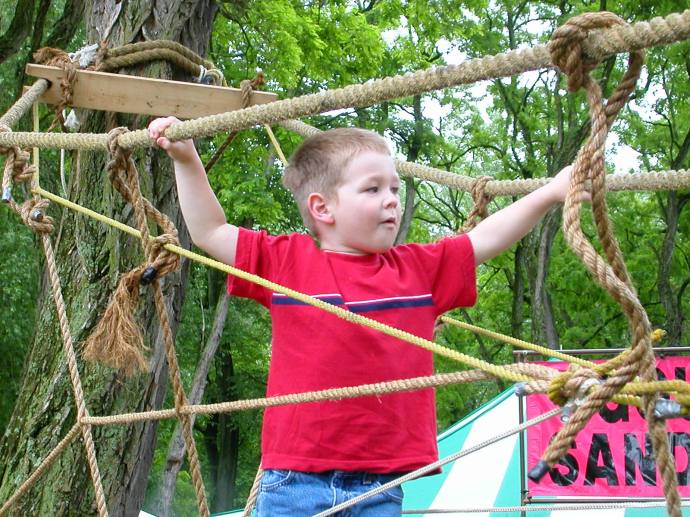
Owen navigating the rope bridge at the Clearwater Festival.

Owen navigating the rope bridge at the Clearwater Festival.

At choir practice, toward the end of the night, a photo of Pete filled the screen, and these words -“Participation!  It’s what all my work has been about.” Singing next to Riley whose voice is bold and clear and lovely, I was a little sad she’ll never get to sing along with Pete.  We stood up and grooved to a song Pete sang with Woody Guthrie, a fun kids’ tune about all working together with a “wiggle and a giggle.”  Kids twirled and fell on the ground and helped each other up.  This full-bodied interaction with music was exactly what Pete had in mind, for it’s not too far a jump to go from singing together to working together in all ways that matter most.

That night the spirit of Pete was all around us, it seemed, filling up our lungs and hearts.  We began “How Can I Keep from Singing?”, a song many seem to take credit for though I think it’s a hymn from the 19th century.  This song always makes me a little weepy, and I was struck that night by the gorgeous impermanence of the music we were making and the universal truth in some of those words.  Our individual and collective voices were vanishing into thin air, and yet long after the notes could no longer be heard, the people who’d gathered would remember the singularity of the effort.

I couldn’t really hear my own voice, though I knew it was a piece of the whole.  Still a little sweaty, emboldened by my plucky daughter who wasn’t nervous in the slightest, I tried to sing with bravery and intention, thinking of Pete, and of the way participating with hundreds of other voices could -was already- rendering a similar kind of grace I sought in breathing life into stories, in trail running at dawn, in gliding through water.

Categories: community, parenting, Uncategorized, writing | Tags: , , , , | 4 Comments

surviving february

Over dinner our family sometimes plays the tattoo game.  It goes something like this:  If you had to get a tattoo, which animal (or fruit or motorized vehicle…) would you choose and where on your body would you put it?  The answers are sometimes surprising. Riley always tries to choose a bird no matter the category. John once chose a unicycle for his “motorized” vehicle, and that led to a half hour discussion on locomotion. But anyway, the kids like our strange amusement.  It’s a pastime that saves us on days we’d otherwise easily fall into lamenting the ways the world feels terribly broken.

How the world is broken seems more evident in February, when the slant of light has changed, but not enough to signal spring. When it feels like it’s been winter long enough, and yet the storms keep on coming. What’s wanting is diversion enough to distract from another several weeks of slate skies and long underwear.

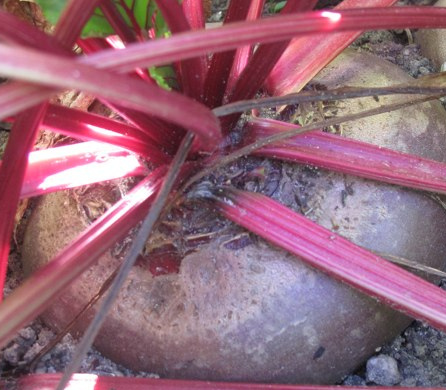
The other day I found the perfect thing on River Teeth‘s website.  You can sign up to get a daily email from them — “28 days of Beautiful Things.”  Each day you will receive an excerpt from Michelle Webster-Hein’s essay “Beautiful Things,” originally published in River Teeth in 2013.  I was hooked after reading the idea for the project, but what really got me was the gorgeous photo of a beet, a vegetable I uniformly detested in youth but which now I cannot eat enough of.

Golden, Chioggia, Detroit Dark Red.  Roasted, pickled, slawed.  Nothing beats (ha) growing them. Feeling them release from the soil when they are ready to be harvested.  Knowing that under the tough exterior awaits brilliant color, sweet earthy flavor. Fresh beets means eating the greens, too, steamed or sauteed in sesame oil or hidden inside chili or lasagna (don’t tell the kids).

I’m not usually very clever about where I’d put a tattoo — I almost always choose my arm, because it seems like if I’d gone through the journey of permanently inking myself, I’d want to be able to admire the art without having to use a mirror.  The kids tell me that’s not the point.  Tattoos are meant to be seen by others.

My obsession with body art doesn’t get much past our dinner game.  When we play vegetable tattoo, a beet in any of its iterations is always my answer.  It’s also the lone answer to another game we play — If you were marooned on a deserted island and could only have one food, what would it be? The beet.  Of course. Though I would have trouble deciding which variety.

The miracle of a beet is the topic of “28 Days of Beautiful Things” first beautiful thing.

Today’s excerpt from Webster-Hein is an ode to dust — oddly dear to her, its silty presence on her belongings means she’s spent time doing what she loves instead of housekeeping.

Amen to that.

From River Teeth's website.  How could anyone not love this gorgeous vegetable?

From River Teeth’s website. So gorgeous every time…

Categories: gardening, kids, outdoors, Uncategorized, writing | Tags: , , , | 2 Comments

cyclopean eye

IMG04 (2)

For the better part of a year, I’ve been agitated about selfies, trying to articulate what feels so Orwellian about pictures replacing words.  I know too many adults who have given themselves over to the selfie revolution.  A growing, navel-gazing army of teens is at the front lines of this surge.  You know the posture – one arm outstretched so the self-directed cyclopean eye of a cell phone tastes an experience in order to broadcast it.

It’s hard to be in the world these days without witnessing a selfie in the making.

At our house most technology is considered poor company for sitting down to eat, engaging in conversations, reading, doing homework.  Cell phones, computers and tablets are not invited to join us at these times, and this rule is largely true when the kids have friends over.  We’re mean parents and expect our kids and their friends to actually hang out together, use real words from their mouths, and also maybe some eye contact. Our kids are pretty accomplished at live conversation.

Still, I know when they leave the house the story is different.  Owen’s received a few alarming selfies of girls scantily clad.  One poor girl repeatedly photographed and texted “I Love You” spelled out with a variety of objects — chocolates, candy canes, Goldfish crackers.  I know about these photos because I check.  A lot of parents don’t.  I’m heartsick that for these girls, no one seems to be discussing self-respect and appropriate use of technology, and probably all sorts of other things too.

More to the point, though,  too many teens are free to use their devices without boundaries or guidance.  The result, it seems to me, is the crafting of a whole culture of self-consumed, image-obsessed, instant-gratification-seeking citizens.  Immediacy of everything is king.  Waiting of any kind is bad.  I worry about the fate of the good, hard work of face-to-face social interaction and conversation.  What about companionable silence?  What about the art of doing one thing at one time? What will happen to these important skills?

It’s hard to say.

Now is the time of year for retrospection.  According to the Oxford Dictionary, the word selfie has been so important to us culturally it’s 2013’s word of the year.  This sort of thing makes me feel I was born in the wrong time, and also feeds my sometimes unease that perhaps I’m just not seeing the world clearly.  I mean, if everybody’s doing it, maybe it has some merit. Maybe if I did IT, I would like IT.  Growth and change mean moving out of one’s comfort zone, after all.

Back in October, I decided I’d do a whole day of selfies, dawn-to-dusk.  First, I had to figure out my platform.  I wasn’t willing to have an Instagram or Snapchat account just for the sake of research, which probably means this wasn’t a valid experiment from the start.  But I was willing to text, so I enlisted my friend Heather.  We agreed to text each other all day to see if we could crack the code of what made selfing so attractive.

The next morning, my alarm rang at o’dark-thirty.  I used my phone alarm, so I could take a picture of myself still in bed, in the dark.  I picked it up and realized two things:  I had no idea how to use the camera directed the wrong way –where was that button anyway?– and also that I’d never taken a picture of myself.  Ever.  I HATE having my picture taken, which is plainly obvious in any picture with me in it.

John rolled over and pushed me to get out of his sleeping space.  “I know what you’re doing,” he said.  “It’s stupid.  Just don’t involve me.”

“But don’t you think it’ll be an interesting sociological experiment?  It might help us understand Owen better.”

“Get out of bed now, please.”

In the pre-dawn light, it occurred to me John was right.   What I’d signed us up to do was, frankly, kind of lame.  While I fumbled with the phone, thinking about calling it off, Heather texted a picture of herself waking up, so I went to the bathroom and took a bunch of pictures of brushing teeth.

Brushing Teeth

Because we couldn’t help ourselves, we also used lots of words, mostly about how foolish it felt to snap pictures of things like our ablutions.  Well, not all of them, just the ones involving teeth.

So the day began.

Heather’s two hours ahead of me.  One photo of brushing teeth is plenty.  Here’s one of her feeding the birds.  Look how excited she was to be involved in this research.  We were crushing it.

IMG02 (3)

There was get-the-paper selfie.  Drink-some-coffee selfie.  Start-some-laundry selfie.  Take-the-kids-to-school selfie.

IMG03 (2)

Another trawl through the interwebs informed the heap of options I’d already decided against taking pictures of:  my hair (a helfie), my backside (a belfie), my workout (a welfie, also called a gym selfie), my drunken stupor (a drelfie), and a funeral (a felfie?).

I opted for a kiss-a-beer selfie (my carrot later in the evening for doing this stupid experiment).

Running-with-the-dog selfie.  Maybe this qualifies as a welfie, except with no abs or mirrors –the rules about this one seem shifty.

IMG01 (6)

The dog-swimming-with-my-face-in-one-corner selfie.

IMG02 (2)

Each time I snapped a photo, I texted it right away.  Waiting for any kind of reply was excruciating.  Sometimes Heather took a whole twenty minutes to respond.  What the hell was she doing anyway, that she couldn’t make a quicker response?  Our experiment was serious business, social science.  Part of the deal was immediacy, because waiting is stupid.  I worried whether she’d aborted the mission, whether her heart was in it, whether she was offended by my zeal or thought my pictures were stupid. Later, in our debrief of the experiment, we discovered we’d been doing the same thing — snapping many pictures but not sending them all, worried that the barrage of photos would be annoying, anxious that we were overdoing it, ill at ease with completely embracing the selfie way of shouting PLEASE RESPOND TO ME.  I guess we’re not very good scientists.

By eleven that morning, I was running out of ideas.  I tried a duckface-gangster selfie, except mostly I looked deranged.  I mean, what grown woman pretends to be a gangster?

I sat down to get some work done and took some pictures of that.  (Don’t zoom in and read the words; I had to murder those darlings.)

IMG03 (1)

Then I tried to concentrate, but it was hard work because right next to me, the phone was silent.  What was she doing anyway? An hour later I took another picture of myself working, texted it again, and tried to concentrate some more.

Heather sent a picture of herself doing the same thing, and also, because she was running out of ideas, some words about why teenagers do stupid things in photos.  It seemed clear that when you’ve got your finger on the trigger all the time, OF COURSE you run out of material.

On a break from work, I googled selfie again and found an article by Alexandra Siferlin in TIME, “Why Selfies Matter.”  Siferlin suggests parents who are gripped about selfies need to unhinge themselves.  (Oh dear).  Selfies are just part of growing up in the digital age (shit).  What counts is to teach kids what KINDS of selfies are acceptable.  And then the article tacks south and basically says that selfies can be dangerous because:

A:  Kids don’t understand what’s an acceptable thing to take pictures of, even when you tell them (but hello, neither do plenty of adults.  I’m talking about you, Anthony Weiner).

B:  Selfies often make kids feel jealous and lonely when they see their friends doing what LOOKS like fun, and they are not.  This leads to risk-taking, potentially of the naughty kind.

And so, the jury’s out, maybe, still, on how all this digital stuff is shaping the next generations.

Back to the experiment, more hours passed.  All my pictures of working looked the same, so I stopped taking them until I left the house and had an experience worth documenting.

Later that day there were more driving-in-the-car selfies while I picked kids up from school.  A man in the car next to us at the stoplight caught us being idiots.  He shook his head and scowled.  When the light turned green, he sped up and cut me off.

Heather sent a driving-in-the-car selfie also.

IMG01 (7)

Back at home, Riley and I perfected the blowfish selfie.

IMG01 (5)

Then we did some yoga and took pictures of ourselves doing downward dog.  I can’t show those photos here because, in addition to our faces, the photo captures everything down the front of my gaping shirt.  Sharing them would violate our household acceptable use policy about privacy.  Our drumbeat of advice for the kids goes something like this:  Remember that there’s no privacy anymore.  Your technological presence is a PERMANENT DIGITAL RECORD. Let us be the voices in your head when you’re out in the world.  Also, while we’re on the subject of out in the world, remember that GENITAL HERPES can ruin your lives.  Please keep your pants on.

But.  I digress.

Like so many I see around me, I went through my whole day without letting the phone out of my sight.  Just in case there was a message responding to my message.  By dinnertime, I was weary of the mission, sick of myself and horrified by how much getting an instant response from one person had come to mean over the course of twelve hours.  What would happen if I expanded my recipient list?  Would I begin to move through my days, starting every sentence with I and forgetting to ask people questions about themselves? If I practiced this kind of relentless self-focus, would my frontal lobe leave my body, pinging around like a pleasure-seeking UFO that couldn’t find the mothership?

While dinner cooked, I flipped through a smutty magazine and enjoyed that carrot beer.  John came home and caught me snapping pictures of myself engaged in these two activities.

“Jesus.  You’re not really doing that are you?”

“What?  It’s research.  Come over by the fire and we’ll selfie together.  Although maybe if we’re both in it, we would dualie…”

“Oh great.  Now it’s a verb.”

Once John was home, I couldn’t experiment with the same verve.  It felt dirty somehow.  We ate dinner, and I left the phone in the other room, though I confess I did flirt with hiding it under the table in my lap.  Afterward, when I checked my texts, Heather had sent along a half-asleep-on-the-couch-and-goodnight selfie.

I took a last picture and sent it, quickly, while John announced from the kitchen that he was turning his phone OFF for the night and suggested I do the same.

Honestly, I needed someone to be the heavy and make some rules.  I was exhausted.

Categories: community, family, girls, kids, parenting, writing | Tags: , , , | 4 Comments

winter’s fist

2013 December 009

It’s been in the single digits for days now.  Minnesota cold, John keeps saying.

On the phone with family and friends, I try to describe the frigidity.  Waking up to temperatures below zero and the way it stings your face, lungs, and teeth.  Sheets of  ice crystals on the original windows of our old house.  Remembering youth, when this sort of cold required us to coddle our car batteries, keep them warm enough to start the next morning.  Though we’ve seen some cars in the neighborhood plugged into heaters, our cars get no such attention.  They’re starting right up but registering their complaint through intermittent dash display lights asking to be serviced.

2013 December 025

We finally stacked a pile of firewood, a job we did quickly, a race against too numb fingers.  It’s the best sort of riches, the delicious possibility of all those fires.  Even better, coming inside from this kind of cold to sit next to that warmth.

2013 December 016

Since the weather turned, I’ve carried in my head a poem by Joe Green, one he and Marquita sent to us as a holiday card, hot off their own printing press, a few years ago.

The Longest Night
 
Ice on the sidewalk.  The first dusting
of snow lasting a week on your deck.
Perhaps tonight you’ve even left
 
 
the faucet dripping in your kitchen sink
to keep the pipes from seizing.
Think of this weather as winter’s fist
 
 
adjusting its grip around the hours.
Then go outside and try to collect all the lost
particles of light around your sleeping house.

2013 December 001

Categories: nature, outdoors, writing | Tags: , , , | 6 Comments

the shoulds

2012 India Trip #3 025

My feet and hands, a little rough and scarred with the miles, are evidence of my wonky pursuits.

Being pampered doesn’t often rank as a way to spend time, but last summer I tagged along with a friend to a salon so we could soak our feet, have the skin on our heels scrubbed with a cheese grater, get our nails painted.  Above the sound of the motorized massage chair and the bubbles in the foot bath, we chatted, catching up while flipping through smutty magazines.  On a stool below me, a very small woman set to work on my feet, clucking about the dead toenails and calluses (thank you, running).  Ill at ease with the perch on my vibrating throne, I tried to engage her in conversation, made difficult by my general discomfort in salons, and also by the language barrier.

When I asked her about her day, she smiled and shook her head and pointed to the bottle of polish I’d picked.  “Empty,” she said, and then went to find another.

After that, I gave myself over to the experience of having my lower legs rubbed with exfoliating scrub and the pedicurist’s deft hands loosening up a tight calf muscle.

Next to us in the bank of chairs sat another woman, older by twenty years or so, who greeted us when we arrived and then sat reading a magazine while her feet were worked over.  Her long, white hair was tied back in a loose ponytail.

A half hour later, we all sat around the drying table together, cotton wedged between our toes, our flip flops on.  It was June.  The kids were about to be out of school, a busy time for families.  My friend and I were lamenting our long list of things to accomplish before summer officially began.

At a lull in our conversation, the white-haired woman leaned toward us and said, “I used to talk the same way.”

We assumed she was referring to our kavetching about kids, summer, or the eighty-seven end-of-year projects and parties.

“But one day,” she went on, “this wonderful friend of mine said to me, ‘Why do you do that?’”

In the pause that followed, I filled in the blanks for what she meant by that. Why did we make ourselves so busy?  Why did we bitch about our kids in public?  Why were we talking about Hollywood stars as if we knew them?

She leaned down and disentangled the cotton from her purple toes, then sat back up.  “Think about it this way,” she said, “there is what you need to do, and there is what you want to do.  But should?  This is a word you can take out of your vocabulary.”

“It sounds good,” my friend said, “but I have a big-ass list of things I should do today.  I definitely don’t want to do them.”

“Yeah,” I chimed in.  “I don’t know if I could break up with should.  I mean, what would I complain about?”

I considered her perspective, doubting its merit.  My life was full of what I should be doing instead of getting a pedicure.  Like playing hooky, escaping from the shoulds was part of the thrill.  In truth, the weight of my obligations felt heavy.  I’d been thinking for months about how to disconnect gracefully from several commitments, which involved going head to head with my guilt-lined Lutheran upbringing.  It’s an ugly, ongoing skirmish.  Also, I was kind of pissed.  I mean, I went to the shop with my friend to relax and not feel shitty, and here was this woman life-coaching me.  Who did she think she was anyway?

The white-haired woman nodded.  She reached into her purse and took out her wallet.  “Those are probably things you need to do. Go to work, clean the house, pick up your kids, make dinner.  Right?”

“But I should do them,” my friend said.

Gathering her things together, the woman shook her head.   “Try it, girls.  It’s very freeing.  Now I think of the world in a totally different way.  Before, I spent a lot of my time fulfilling the obligation of should.  It takes practice not to, because we’ve all been at this kind of thinking for, well, our whole lives.”  She paid the gal who’d worked up her feet, waved a goodbye to us, and left the shop.

My friend and I sat looking at each other for a moment.  “I bet she cruises the nail shop circuit,” she said. “She’s like a salon prophet or something.”

“Or full of shit,” I said.  “And also clearly has no relentlessly hungry kids to feed.  Probably gets her toilets cleaned by someone else.”

After we left the shop, I filed this encounter away, chocking the white-haired woman’s advice up to a world view of someone who didn’t pressure herself too much.  The bored rich.  A woman who read a lot of self-help stuff and hired out for every last thing.

Except I didn’t really believe that.  I kind of liked her calm, self-assured way of being, and also that she hadn’t dyed her hair or cut it super short to tame the wire out of it.  She seemed like someone I might be friends with.  We’d only had a few minutes’ exchange with her, but her words worm-holed within me all summer and into fall.  I couldn’t say should without thinking of her, without pausing to reframe my sentiment and edit out the shoulds.

Lately, John and I have been talking with Owen about choosing a college, about what he’d like to do in the world.  Our advice to him has always been to seek a path of joy and fulfillment, as well as one that will make him a living.  Every time we have this conversation with Owen, though, I can’t help but think to myself about the similar, parallel path of partnering need and want.

At the risk of seeming like a white-haired lady groupie, it occurs to me that fulfillment comes when want and need intersect in a singular pursuit or practice, and that this is a rare, precious thing.

Of course, it’s hard to hit the right groove all the time.  The dailyness of life isn’t all rainbow brilliant, shot full of light and unicorns and feel-goodery and self-worth.  My kids make me crazy. The state of the world is scary.  Fully in touch with my inner bitch, I’m not nearly as patient, loving or kind as I aim to be.

But living with purpose serves me well most of the time.  I need and want to raise thinking, compassionate kids in the world.  I need and want to write.  I need and want to garden, to know how to do things for myself, to be a good friend, to travel and know the world, to go outside and teach kids how to do the same.  There’s little room for should in any of these passions.

I haven’t quite been able to get to the same level of bliss about cleaning, driving or laundry, but it could come for me someday.

Meanwhile, in this season of thanks, I’ll sit down to the table with my family, enjoy a meal we’ve all pitched in to prepare, and know as certainly as I know anything that I both need and want to be spending my time this way.

2013 November 067

Categories: community, family, girls, parenting, writing | Tags: , , , , | 4 Comments

arturo

what yearning looks like

what yearning looks like

For our dog Zora, spring and fall are full of yearning.  Each cusp season, she becomes a quivering, drooling, yowling mass of desire. She desires cats.  She desires birds.  She desires the mail carrier.  But what she desires most is squirrels.  Whatever constellation of breeds she’s sprung from has programmed her to believe  she will actually win a squirrel.  Any day now.

Training for the big day involves a regimen of smearing the glass with her nose to track squirrels in the backyard, whine-singing a song that will lure them to her, hurling herself at the fence they like to traverse, and going in and out twenty times a day to monitor the premises.  There are also hours of daintily gumming a stuffed chipmunk she’s had since we got her five years ago.  Other toys roughly approximating real animals have died quick deaths in a blaze of stuffing and plastic parts.  But Chippy is very precious –she would never fully ingest it.  Chippy’s squeaker is broken.  Chippy is also missing an eye and part of an ear, and looks a little an object used to foreshadow murder in a bad horror film.  It makes me wonder what she’d actually do if she managed to catch the real thing.

Zora spent the first month she came to live with us wearing a muddy track from the mimosa tree to the telephone pole to the gate to the garden in the backyard.  We’d just redone the landscaping, which she destroyed.  Her sole quest was chasing gray squirrels, especially a pair that came to play every morning about the same time.  One day I came home to find the three of them faced off, Zora crouched at the base of the telephone pole, the squirrels immobile, noses touching, fifteen feet up.  No one moved for three hours.

At our new house we also have squirrels, red ones, who make their gray cousins seem lazy and stupid.

It wasn’t long after we moved in that we met the new object of desire.  Arturo.  He’d come calling mid-morning, squatting by the back door while eating a sunflower head from our garden and looking at us through the glass.  Which is to say he was very close to the glass.  So close he used the window as leverage to extract seeds, never taking his eyes off our lives inside.  This, of course, was a thrilling new development for Zora, who could somehow hear him no matter where she was in the house.  Arturo would stay an extra beat, watching her smash herself into the glass, frothing at the mouth, just on the other side of his nuts, before he’d scamper off the deck and up into the oak tree.

Although I do often name things when I get the itch (We have a lamp called Celeste, I’m not sure why.  My truck’s name is Stella.  John’s mountain bike’s name is Jolene, as in please don’t steal my man…), I’ve never named a squirrel before.  I don’t know why Arturo is this creature’s name, except that he is VERY distinct.  He is easily the largest squirrel I’ve ever seen.  I mean, almost the size of a small house cat.  Despite his girth, he’s fast enough to still be alive, savvy enough to dodge all my attempts at taking his photo, and very decidedly the boss of this territory.

Arturo still comes calling every day, to the delight and crazed desire of Zora.  On the deck we’ve left an acorn squash that fell out of a shopping bag, one he quickly helped himself to, so he’s got extra inducement to make an appearance.  He’s clearly getting enough to eat.  He’s bigger than ever, even for a squirrel preparing for winter.  I’m a little worried about how much more weight he can gain and still get the job of squirreling done.

arturo's snack bar

arturo’s snack bar

Lately, he’s taken to sitting up on the fence near the deck.  Other squirrels in Arturo’s posse hang out there too, though not when he’s there.  In pairs usually, they run along the fence, making a chittering racket, doing a snake-charmer thing with their tales, dancing squirrel hip-hop with their back feet.

Arturo is always alone.  And he never does any hoorahing.  He just sits.  His posture is much the same as the sunflower seed window squatting, but his safer vantage point gives him extra time to taunt Zora.  Seemingly unperturbed, he eats, unblinking, languorously, while Zora throws herself against the fence beneath him, begging him to come down.

From the kitchen window the other day, I watched Arturo sitting on the fence, surveying the yard like some kind of mob boss while he consumed an entire chestnut.  It was a long squat, even for Arturo.  Maybe he’s got henchmen to deal with the Red-tails and Cooper’s hawks that troll the yards around here.  Maybe he thinks he can take out any house cat that crosses him.  It’s hard to say.

But he was clearly feeling very comfortable, because hanging down and resting against the fence was his massive nut sack.  I had no idea male squirrels could possess such impressive jewels.  But they there were, huge and hairy and disproportionate to his frame, on display as if was a rodent porn star.

I’m not going to contact Guinness Book of World Records or anything, though a quick online search tells me I’m not the first to be stunned by squirrel genitalia.  Arturo’s junk puts every photo I saw on the interwebs to shame, though.  Also, according to Uncle Google, red squirrels are supposed to be smaller than gray squirrels, and they’re more territorial than most species.  They store their booty in caches crammed with nuts, called middens, which are usually in the middle of their territory.  I’ve seen Arturo win some impressive arboreal battles against smaller squirrels.  It seems safe to say that our yard is Midden-landia for him, and if it’s true that he can live up to 10 years or more, Arturo’s here to stay, nut sack and all.

I don’t know how old Arturo is.  This season could be his swan song.  And it’s not all about love and admiration.  Days when I know he’s been mucking in my garden, gleefully digging up garlic bulbs when there’s plenty of food if he’d just climb a damn tree, I’m tempted to get a bb gun.  Not that I’d be able to hit him.  He’s far too crafty to get taken down by the likes of me.

Still, out of love and respect, Zora and I could help him lose a little weight by both chasing him, maybe help prolong his life.  After all, we are in his territory, and until one of his minions can figure out how to arm wrestle him out of it, Arturo’s the boss.

Categories: dogs, fiction, gardening, writing | Tags: , , , | 2 Comments

it’ll keep you up at night, and it’s worth it

At our house, buying a hardback book is a big event.  We splurge when authors we adore publish something new and we can’t possibly wait our turn at the library or for the paperback.  We’ll also get our wallets out for the promise of a read we can’t resist.  Not being able to resist was the impulse behind acquiring Elizabeth Gilbert’s The Signature of All Things.

Signature of all Things

In full disclosure, I never read Eat, Pray, Love.  Then and now, I rankle at the gimmick of it, at the way Gilbert pitched to her publisher a trip for healing from divorce; in three countries she’d search for love and spirituality and then write a book about it.  What really chapped my hide, in truth, was the notion that a pre-planned and pre-paid guide to healing was a self-helpish story to tell rather than a private journey.  I’m pretty sure enlightenment isn’t something you can decide to acquire, nor a thing you can pay for.  Probably I’m jealous and kind of a bitch and resistant to popular things. Divorce is shitty, to be sure, and Gilbert likely wanted to crawl in a hole and hide but resisted, but it’s been my experience that both love and spirituality are quests you can’t engage in with a head and heart full of lists and expectations.  Love and enlightenment come winging at you when you’re NOT questing, when you’re vulnerable and off-guard and open to the great mystery of being alive.

That almost every woman I knew was in a hot lather over how amazing and life-changing the book was, one they felt made them more thoughtful and stronger as a woman (a comment I heard repeatedly), only made me want to read it less.  And then even less during Gilbert’s 187 week stint on the New York Times Bestseller List.  And then even less when her story of love and spirituality became a movie (also pre-paid, I’d imagine).

Still, I was intrigued by the mission of Gilbert’s The Signature of All Things, by its ambitious romp through more than a century and across the globe, and also worried that she had “gotten” to the idea of my own novel, at least a little, before I’m finished with it.  She didn’t, I’m safe there, not that we’d be allowed in the same literary room anyway, honestly, unless I’m asking for her autograph.  But this much I believe to be true:  Elizabeth Gilbert’s book will, or should be, on the list to win the Pulitzer this year.

Gilbert’s Henry Whittaker is a plant thief in 18th century England, grifting the plants and clients of his father’s employer at Kew Gardens, making his mark in the world one small exotic cutting at a time, and then transplanting himself to Philadephia to build his own botanical pharmaceutical dynasty.  Henry’s daughter Alma inherits this vast network of wealth and her father’s love of plants. A polyglot, a seeker of wild places, a solitary child, Alma gets her mother’s sharp intelligence and curiosity, and also a reserve that renders her emotionally daft in the world.  And then there’s Alma’s figure, big and strong as a man’s, and her face, tragically plain, anything but feminine, next to the stunning beauty of her adopted sister Prudence.  Such is the stage upon which Gilbert sets her tale.

And what a stage it is.  What rises to the surface, above every disappointment heaped upon heartbreak for every character, not just for Alma, is the utter loneliness braiding these characters together, and the way they soldier on in the name of survival.  For, of course, their fates are as connected as those of any Dickensian tale.  Also, pinging around the edges of the narrative are Darwin’s theories, after all.  Alma attempts to understand the human condition inside science, seeking to crack the code of what makes mosses, a microcosm of the natural world, work in order to understand people and the way they love.  There’s scientific genius in her, which a reader believes because Gilbert’s clearly done her homework, but Alma’s quest is also driven by her own aching heart.

It’s not a flawless tale, especially toward the end when we see where Gilbert’s headed with Alma, but the choices the writer makes for her are true to the story, or more to the point, true to the Alma with whom we’ve spent so many years.

For a few days now, I’ve been unable to pick up another book.  I’m still steeping in the delicious sting of Gilbert’s story, which I took my time to read because I knew I’d be sad when it was over.  I am.

Buy it in hardback.  Read it, but not too fast.  Alma’s yearning interior and lush exterior worlds will keep you up at night.

A few reviews are here if you still don’t believe me.

Barbara Kingsolver in The New York Times

Elizabeth Day in The Guardian

Categories: book review, books, fiction, publishing, writing | Tags: , , , , , , | 4 Comments

you don’t get what you don’t ask for

Until last week, for several weeks, our air space was jammed with the frequency of Homecoming:  the powder puff football game and which class had the strongest athletes, then the “real” football game (actual words used by actual boys) and whether we’d defeat our rivals, then the dance, which was the most painful part, a reminder of how complicated being young is.  It was both entertaining and excruciating to watch Owen begin to understand the gaping maw between his prevailing view that the world is a black and white place – easy to legislate, govern, and operate within if adults would just move over and let teenagers be in charge – and a growing sense that maybe life is not that simple after all.

The real sport of Homecoming was negotiating the dance.  The pre-game show began weeks before the event as boys negotiated amongst themselves which girls to ask and how.  On our way to swim practice each night, Owen’s friends debriefed.

Here is a sample conversation from the car (A conversation highly similar to this was reenacted every night for at least two weeks):

B:               You should ask Emma because she’s going to say no to Brian and she will say yes to you.

Owen:       But I want to ask Izzy.

D:                Dude, you can’t ask Izzy.  Tim’s asking her.

Owen:        But what if I ask Izzy before Tim does?

B:                You can’t do that because Tim already told us he’s asking her.  It’s like stealing.  Not cool.

Owen:        But what if I do?

D:                Don’t do it, man.  That’s lame.  You should ask Emma.

Owen:       You should go with Emma.

D:                I can’t go with Emma.  She’s super quiet and so am I and nobody would talk all night.

B:                D’s going to ask Jane because she talks a lot.  She’ll make it fun.  And you should ask Emma.

Owen:        I don’t know.  I want to go with Izzy.  What if I ask Kate?

B:                Dude.  I’m asking Kate.  D’s asking Jane.  You should ask Emma.  It’ll be fun, I promise.  Plus, you just got here, so you need us to  help you understand them.

Owen:        Them who?

B:                 Girls, dumbass.

There was a long pause while we waited to turn left into the pool parking lot.  It sounded settled to me.  We pulled up to the front door and the boys loitered in the car, gathering up their gear bags.

Owen:         So.  I can’t ask Izzy?  I mean.  For sure Tim knows WE know he’s going to ask?

B:                  You kind of suck at this game.

Once they’d settled the girl question, the issue of the ASK descended.  My recollection, which may be wrong, is that being asked to Homecoming used to go something like this:

(Written on a note passed to me in history with Doritos stains on one corner):

Wanna go to the dance with me?

OR

(Written on a note shoved inside the slats of my locker door)

Will you go to Homecoming with me? Check yes or no and bring it to English.


In those days, which Owen tells me were uninspired, boys didn’t ask girls in person.  It was almost always on a note, or through a friend, and in this way not much has changed since the dark ages.  Except that now part of THE ASK has to be creative, thoughtful, unique.  A big statement that others see, a “treat” meant to impress with a sugary crust of embarrassment.

Me:            So, you’re going with Emma.

Owen:       Yes.  Not Izzy because she said yes to Tim.

Me:               I see.  Have you asked Emma yet?

Owen:        Not yet.  I have to figure out how to do it.

Me:             I see.  You mean, when you’ll have a chance to see her to ask her?

Owen:       No.  It’s not like that.  You have to DO something.  Like creative.

Me:             Like creative how?

Owen:        I was thinking about putting a piñata in her front yard?  Inside would be candy and a bunch of ASKS wrapped around the candy, and when she breaks it open, it all falls out?

Me:             I see.  So you’re going to find all that at the store, then wrap each candy with papers that say something clever, then put the candy inside the piñata, then take it to her house after asking her parents and then hang it on a tree in the front yard and leave a stick or a bat to whack it open with?  By tomorrow?

Owen:        Geez.  You make it sound like such a big deal.  Also.   I thought you might help me do it.

Me:              But I’m not going to the dance with Emma.

Owen:         Mawwwwmmm.  I’m just brainstorming here.  I’m supposed to do something creative.  Can’t you just help me think of something, you know, clever?

Me:             What about just asking her?

At this point he left the room, shaking his head.

As Owen deliberated, his friends settled in on their ASK.  They pushed the ASK date ahead.  B bought a betta fish (also known as a Siamese fighting fish) and left it in a tank in Kate’s room with a speech balloon asking her to the dance.  It was an interesting choice – given the known aggressive nature of this species, which is not a “schooling” fish but one that prefers solitude and without it will fight— but I wisely kept my thoughts on metaphor to myself. D put some pink flamingoes in Jane’s front yard with a poster asking her to boogie with him, which was also funny because D had confessed to me that he hates to dance.

B and D waited for Owen to figure out his ASK, and then they all agreed to go forth and ASK on the same day.

The night before the ASK:

Owen:           I’m sick of brainstorming.  I’m just going to get some flowers and leave them in Emma’s locker.

Me:                 Sounds good.  How will you get her combination?

Owen:            B’s getting it.  Will you get me some flowers today?

Me:                 Sorry, pal.  That’s your job.  You can walk over to the shopping center and choose some.  We’ll put them in water until you’re ready.

Owen:            Wait.  I have to do it?

Me:                 Yes, sir.  Because Emma is not my date.  Take your wallet.  Please don’t get carnations; they’re grandma flowers.

Off Owen went to flower shop at the market, where he chose six red roses, proudly brought them home remarking on the deal he got, then threw them on the counter, sighing with relief.  I felt bad, having sent him into battle with so little information.  We had a nice chat about the loud statement a flower like the red rose makes in the romantic world, at the end of which he just shrugged and said, “I’m not going to marry her or anything.  They’re just flowers.”  And that was that.

We hadn’t even gotten to costuming yet, and I was already exhausted.  The boys all chose bow ties.  Those had to match the dresses.  Emma’s mom picked Owen up after school one day and off they went to the mall to choose a bow tie that matched the champagne color in Emma’s dress.  I can only imagine what this must have been like for Owen – shopping, which he hates, with a girl he hardly knew and her mother who was in charge of choosing part of his outfit.  For my part, I was relieved, since I also hate shopping.  He came home with a bow tie that cost forty dollars and went to bed early that night.

Then began negotiations about dinner and which restaurant would be good for a party of 12.  B was in charge of reservations, and there was a lot of conversation in the car about the automatic gratuity for parties so large and whether it was a scam.  Then there was the issue of transportation.  As sophomores, many of them not yet driving, they decided it was totally uncool to have parents ferrying them around.  They booked a limo, and Owen was in charge of organizing that.  Meanwhile, his stash of earned cash was dwindling.

We expect him to use his own money for many things, and this policy has been instrumental in his more thoughtful and miserly approach to spending, for which I am grateful.  There’s nothing like having some skin in the game of spending to learn about money management.  I suggested he and Emma split the tab for the night and was told that’s not how you do it.  When I asked him why, he shrugged and said, “I guess that’s just how it works.  I think the girls pay when there’s a Sadie Hawkins dance or something, except I’m not sure we have that kind of dance at our school.”

We paid for the clothes, but the tickets, dinner, flowers and transportation were up to him.  It was hard to watch him struggle with how much the night would cost and whether it was worth it.  He wisely kept to himself any bitterness he harbored about his friends’ parents’ footing the entire bill for the time.

By the time the actual dance arrived, and we’d learned how to tie a bow tie courtesy of YouTube, and gotten more flowers, and showed up early to the garden of friend’s house to take pictures, my boy seemed to have lost the bounce in his bungee.  But he rallied.

The night was a success, thankfully, and Emma proved to be a fun date, though the next morning over breakfast Owen confessed he was glad it was over.

Owen:          Now I can focus on swimming and school.  I think my math grade has dropped.

Me:               Was it worth it, do you think?

He chewed his bagel and thought a minute.

Owen:         I think so.  I mean, we could have had a dance without all that, you know, stuff.  It was a lot of stress.  Plus, I’m broke now.  Life is expensive, you know?

Me:              I do know.

He shook his head and opened the sports page and we were quiet for a minute.

Owen:        I mean, I’m just not sure about events where the boy has to pay for the whole thing.  It’s like you say.  Where’s the skin in the game if someone else is paying for you? I just don’t know about it.

I kept to myself all the things I wanted to say, or the high-five I itched to give him, or how I’d asked myself that same question more than a few times.

Me:             What if I come up with a creative ASK for cleaning the bathroom and washing the car?  It’s a paying gig.

Owen:        Okay.  You can skip the flowers and candy, though.

2013 September 057

Categories: kids, parenting, writing | Tags: , | 8 Comments

famine of the heart

Recently I picked up a copy of Faulkner’s As I Lay Dying, a novel I somehow missed in my literature studies, though a long time ago his story “Barn Burning,” maybe one of the best short stories ever written, inspired me to become a teacher and a writer.  Also, I wanted to see if I remembered correctly that Faulkner’s work might not translate that well to the big screen.  James Franco is either a genius or out of his mind.  When the film comes to town, I’ll be curious to see which, or if it’s some of both.

What strikes me about Faulkner’s “experimental” novel is two things:  the deception in its structure, which is to say a first impression that its short chapters and multiple voices would make for a quick read; and also that the engine in the novel – the problem of how to get Addie Bundren’s body to her native Jefferson, Mississippi to be buried (her dying wish) despite a flood, and then injury, and then fire — is overshadowed by what motivates her husband Anse and her children Cash, Darl, Jewel, Dewey Dell and Vardaman to engage in this journey.  The fifteen voices that tell the story, including one chapter from Addie herself, reveal what undergirds every action in the novel:  The inscrutable world is a dark and hard place full of relentless futility.  The best we can hope for is to survive the world or leave it on our own terms, as Addie herself seems to have done.  Faulkner once said his writing was “hammering at…that man is indestructible because of his simple will to freedom.”   (An interview from 1956 is here).  His characters’ insistence on survival, however misguided or self-interested, is the relentless drumbeat of As I Lay Dying.

Faulkner called this novel a “tour de force,” and I suppose it is in the way it was different, an experiment that flouted conventional storytelling.  I spent more time than I’d like to admit keeping track of the book in the plot way.  Time loops around, for one, and I found myself rereading chapters more than a few times to make sure I was getting it.  Addie shows up for just one chapter to speak her mind long after she’s already a dead and rotting corpse on her way to Jefferson, for example.  Anse and the five kids all help to tell the story, and in each of their pages their mundane, repetitive conversations are interrupted by language in italics that seems to represent the lyrical, internal language each character is unable to give voice to on the surface. I’m not sure this technique really works.

But to be sure Faulkner’s intentions were grand.  The title, a line from The Odyssey, is the first hint that Faulkner’s plan is epic in scale.  (Thank you, Wikipedia, for teaching me that As I Lay Dying is also the name of a metalcore band, whose “lyrics and music take no direct inspiration from the novel.”  Dear Faulkner, are you spinning brodies in your grave? ) But it’s a short epic, chock full of unfortunate events not unlike Odysseus’ journey.  There are broken bones, a rotting corpse, a burned down barn, a bad love affair, a hoped for abortion, sexual abuse, siblings sending their brother to a mental institution, and finally, a marriage. By the time we arrive to Jefferson to bury Addie, digging the hole and putting her in it only takes a few sentences, because by this time, the story is about anything but burying Addie.  What has propelled the family to this place has been eclipsed by the fractured agenda of each character, with Anse, who takes something from each of his children in order to serve himself, at the center of it all.

I had the best success as a reader when I focused on giving myself over to each character’s way of revealing the story instead of tallying up my frustrations.  They’re a heartbreaking lot, some of them despicable like Anse, others tragic like Cash, the one character aside from Vardaman whose volition is not about his own needs.

Still, between the work required to be a thoughtful reader of Faulkner’s book, and what I think is the failed technique of those italics to represent what his characters wanted to say, if only they could, I’m not sure this book would be published now.  Unless I’m reading it wrong, I’m not sure most people are willing to work that hard for an ending so dark, what with our penchant for endings in which all loose ends are neatly wrapped and characters leave the scene with no hard feelings.

But maybe James Franco’s split-screen delivery will work to unspool for audiences the existential question inherent in the gap between a heart that sings lyrically against the grim wilds of a hardscrabble life.  I gotta hand it to Franco for trying anyway.  When the film comes my way, I’ll be one of the first in line to see it.

Categories: books, fiction, movies, publishing, short story, writing | Tags: , , , , , | 4 Comments

feeling young at heart has gotten me this far

For several years my running pals tried to woo me into running a marathon with them.  I was diplomatic in my rejections – that kind of training would ruin my already fractured writing life; I was worried it would turn running into a job; I really liked the half marathon distance.  Also, I’d been at the finish line of other marathons cheering friends on, and what I’d witnessed there was a lot of crying.  More than a few runners would cross the finish line, get their foil blanket thingy, and then break down, some of them falling down, sobbing.  It didn’t seem like the kind of activity for me.

At some point last year around my birthday, when I was feeling fragile and mid-life-crisis-y, I realized I COULD run a marathon if I wanted to, and that I probably SHOULD do it soon since I wasn’t getting any younger.  Just once.  The sisterhood could drag me across the finish line if it came to that.  I signed up and paid the eye-watering registration fee for the pleasure of torturing myself.  And also for some pretty good bling at the finish line, according to my friends.

So began the training.  It was thrilling to declare and strive for such an ambitious goal.  I spent a lot of time in the woods, running on back roads and trails, and the marathon was a good excuse to stay in the forest longer.

Then the long Sunday runs began.  15 miles.  17 miles.  18 miles.  20 miles.  Allotting that much time of course was an issue, though we made a point to begin early in the morning and be finished before lunch.  We staged water and fuel stops.  Even when someone wasn’t feeling great, someone else was, and that person would chat the rest of us along until we were finished.  Almost worse than the runs themselves was the week of dread leading up to them.  There was no sleeping in the day of a long run.  We had to beat the heat.  So each week I stared down three or four or more hours of running that began before dawn.

I tried to keep the whining to a minimum, because, really, you sound like kind of an asshole when you complain about something you’ve chosen to do on purpose.  It occurred to me not too far into the journey that most people would be hard-pressed to devote enough hours for such a feat, and that I was lucky to be able to make the time.

We trained through the spring and summer together, while I battled the dreaded Piriformis Syndrome.  There’s a smart medical definition, but the short version is this:  there’s a muscle in your ass that can wreak havoc up into your back, down into your hamstrings and calves, and through your groin and inner thighs if you are fond of   long-distance running or prolonged sitting, both of which I was enjoying in copious amounts between running and writing.  Some days my legs felt so tight it was like wearing a really tight climbing harness while running.  The Piriformis announces itself for many runners, especially if they are not good at stretching.  Which I am not.  Because I used to be able to do athletic events off the couch, and really, feeling young at heart has gotten me this far.

I forced myself to be better at stretching, and it worked.  For a while.

After I moved and was without my posse, I wasn’t nearly so diligent at either stretching or running.  I’d get up late and have to run in the blistering heat, then get bored almost at my goal of 20 miles and stop at 17.  Or 14.  I’d go for a swim in the river instead.  I drank more beer than I should have – not during running (Well.  There was that one time…), but after.  To rehydrate.  I’d lie down to stretch when I got home and then get distracted by something shiny – People Magazine or gardening or the dog biting at my head.  Meanwhile, the big day loomed.

The day of event bands along the route and the big-hearted crowd with their snacks and cheers and good will felt more like Carnival than an athletic event.  There were aid stations every two miles with electrolytes, gummy bears, pretzels.  I had my running pals, some friends who jumped in to run along the way, my cousin, and others who had Cheezits just when I needed them.

Running Gang Before the Event.

Running Gang Before the Event

My old nemesis Piriformis announced herself at the beginning of the race, but not so badly I couldn’t ignore her.  Besides, it was entirely my fault she was still with me.  Until about mile 19, life was good.  7 miles to go and the harness was cinching and there was another hour of running and I couldn’t remember why I thought running a marathon was a good idea or even fun.  Crying, quitting, hitchhiking with that nice motorcycle guy who weaves in and out of the race, or joining one of the front yard red solo cup beer parties all seemed like reasonable choices.

But there I was, doing my just once marathon, my one and done, and I’d be damned if I was going to quit.  I wasn’t the only one feeling the burn.  Around mile 21 people around me began to walk, limp, stretch, lie down, you name it, it was happening.  One guy was throwing up gummy bears into the bushes.  Another took off his shoes, threw them on the sidewalk, and kept running in nothing but socks.

My cousin stuck with me, and I did more listening than talking; I don’t remember much about the last five miles, and then we were across the finish line, and someone was draping the foil blanket around my shoulders, and someone else gave me a medal, and I followed the line of finishers to the food station.  My friends and I wandered like zombies, dried sweat crystals on our faces and our lips pale.

I remembered about the crying from other events and understood, finally, that the tears are born out of relief and gratitude and exhaustion and exertion.  I didn’t cry but I did sit down and watch other runners making their way through the feed zone.  Only a few were crying.  Wrapped in their blankets, dazed, most of them looked as if they’d sustained some kind of trauma.

Friends have told me that after their first few marathons, they were so burned out they couldn’t bring themselves to run again for several months.  This urge hasn’t come for me.  What’s followed the event is pride in finishing, even though it took longer than I’d hoped, and a deep gratitude for running pals — I’d probably have abandoned the mission without them.  After a few days I hit the trail and shook out my legs.  They felt surprisingly good.

Still, I think I’m going to hang up my marathon shoes, stretch more and dump that bitch Piriformis, get back to the kind of running I love best – on the trails, with the dog, without a watch.  It’s a good pace for living.

Categories: girls, running, writing | Tags: , | 4 Comments

Create a free website or blog at WordPress.com.